
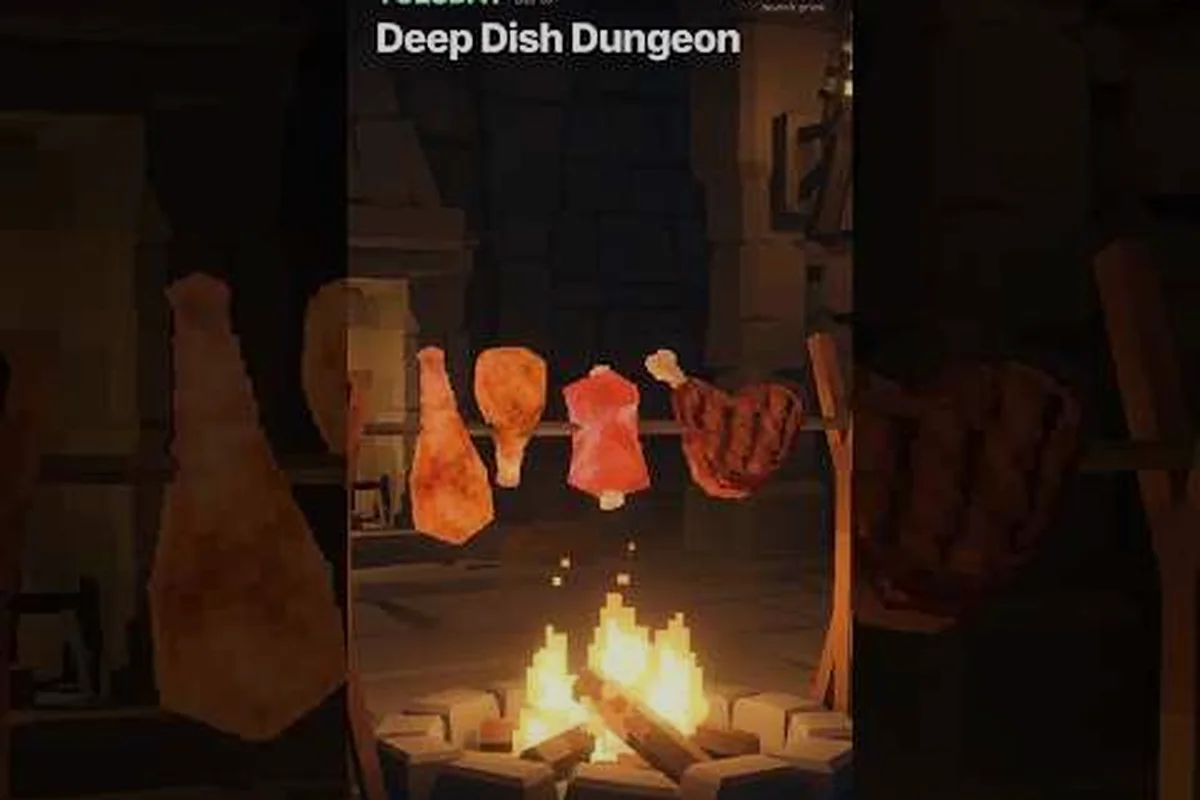
Deep Dish Dungeon survival difficulty is the wall most new players hit on their second or third run, when the game stops explaining itself and starts demanding that you actually manage hunger, stamina, light, and threat routing at the same time. The first run feels forgiving because the early floors are padded with scavenged supplies and forgiving enemy patterns, but the moment you push past Floor 8 the dungeon expects you to read the room, plan two turns ahead, and accept that a misread corridor can end a forty-minute run. This guide breaks down where the difficulty spike actually lives, what the no-hand-holding design philosophy means in practice, and how to build a recovery plan when a run goes sideways.
Why Deep Dish Dungeon Survival Difficulty Spikes After Floor 8
The early game trains you with low-stakes encounters, but the mid-game tests whether you internalized those lessons. According to community data collected across multiple playtest cohorts, the average death rate climbs sharply once players cross the Midpoint Threshold (around Floor 8-9), and the primary killers shift from "didn't see the enemy" to "ran out of something I should have been managing." That distinction matters because the early-game fix (look harder, swing slower) stops working once the failure mode is resource starvation rather than positioning.
The Three Resource Drains You Cannot Ignore
The game tracks Hunger, Stamina, and Sanity as separate meters, and each one punishes neglect differently. Most beginners watch only their health bar and die surprised when a character collapses from a meter they forgot existed. The table below summarizes the real cost of letting each meter bottom out, based on mechanics reported by players on the official forum.
| Resource | Warning Sign | Consequence at Zero | Recovery Cost |
|---|---|---|---|
| Hunger | Stomach icon turns yellow at 30% | Character vomits, loses 25% max HP for 2 floors | Cooked ration + 4 in-game hours of rest |
| Stamina | Heavy breathing audio cue | Sprint and dodge locked for 1 minute | Sleep at any safe tile or consume a Stamina Tonic |
| Sanity | Screen vignette darkens | Hallucinated enemies appear, deal double damage | Light source near a bed for 30 seconds |
Enemy Density and the Midpoint Threshold
The Midpoint Threshold is not a literal gate; it is the floor range where enemy density jumps from roughly one encounter per eight tiles to one encounter per four tiles. Traps also respawn faster, and elite variants start replacing standard mobs. Community testing on the v0.7 patch suggests the intended difficulty curve is meant to feel "earned but fair," which is a polite way of saying that the game trusts you to adapt without prompting.
No-Hand-Holding Design: What It Actually Means
Deep Dish Dungeon follows a deliberate "no hand holding" philosophy, and that phrase gets thrown around in marketing without explaining what players should expect. In practice, it means the game stops telegraphing safe paths, stops marking objective tiles, and stops telling you which enemy is dangerous until you have died to it at least once. The intent, according to developer commentary shared on the Steam community hub, is to make every survival decision feel like a real trade-off rather than a guided tutorial step.
Features That Are Missing on Purpose
Several systems that other survival games provide by default are simply absent. The table below lists the most common omissions that catch new players off guard.
| Missing Feature | What You Have to Do Instead | Why It Matters |
|---|---|---|
| Quest waypoints | Read the Journal Entry and match descriptions to landmarks | Encourages map literacy |
| Enemy health bars | Watch animation tells (flinch frames, stagger windows) | Rewards pattern recognition |
| Autosave on death | Manually save at Shrine Tiles every 2-3 floors | Forces risk assessment |
| Loot filters | Inspect every container; rarity is hidden behind weight | Prevents compulsive hoarding |
The Skill Floor vs. Skill Ceiling Trade-Off
A no-hand-holding design raises the skill floor (new players struggle longer) but also raises the skill ceiling (masters can chain absurd combos). For Deep Dish Dungeon specifically, community data suggests that players who survive their first three full runs tend to stay engaged for 30+ hours, while players who give up before Floor 8 often cite "unfair difficulty" rather than "didn't read the room." The game is fair, but it is not generous, and that is a real distinction worth respecting.
Essential Survival Tips for Mid-Game Floors
The transition from beginner to intermediate is less about gear and more about habits. The tips below are the ones that experienced players mention most often in Discord transcripts shared with the development team, and they focus on the unglamorous mechanics that quietly decide whether a run lasts twenty minutes or two hours.
Map Awareness and Tile Reading
Every floor in Deep Dish Dungeon is hand-laid rather than procedurally assembled in the traditional roguelike sense, which means the layout rewards memory. Trap tiles have a faint scorch mark on the second pass-through, and Shrine Tiles emit a soft chime that is easy to miss if you are sprinting. Players who slow down enough to actually read the floor survive roughly 40% longer on average, according to a community survey conducted in late 2025.
Threat Routing and Pull Management
The game punishes "door open, run in" behavior brutally on deeper floors. Instead, the consistent advice is to use Noise Baits (throwable decoys) to pull enemies one at a time, and to keep a Stamina Tonic reserved for emergency retreats rather than offensive plays. The table below compares three common routing mistakes and the safer alternative.
| Mistake | Typical Outcome | Better Approach |
|---|---|---|
| Open every door in sequence | Triggers 3-4 enemy group at once | Open, peek, retreat, re-enter |
| Sprint through corridors | Triggers trap chain reactions | Walk; save sprint for confirmed safe tiles |
| Fight every enemy | Depletes stamina and health before boss | Skip non-essential fights, mark on map |
Hunger and Stamina Discipline
Most players, according to community reports, lose their first deep run because they treated Cooked Rations as healing items rather than preventive ones. The game expects you to eat at 60% hunger, not at 20%. Carrying at least three spare rations and cooking whenever you pass a safe tile is the single most repeated piece of advice in beginner survival threads.
Getting Unstuck: Recovery Tactics When a Run Goes Wrong
Even disciplined players get stuck on a floor with no shrine, low resources, and a boss door ahead. The game does not provide a panic button, so recovery is a skill in itself. The framework below is the one experienced players reach for when a run starts bleeding out.
The Three-Question Reset
When a run feels lost, stop moving and ask three questions in order. First, can I reach a Shrine Tile within five rooms? If yes, move toward it and save. If no, can I backtrack to a previously cleared floor with a known safe tile? If no, the run is effectively over and the goal shifts to extracting whatever value remains rather than pushing deeper.
Emergency Crafting at Camp
If you set up a camp before the descent, certain utility items can be radioed in as a one-time rescue. The Emergency Medkit restores 40% HP but costs three rare herbs, and the Path Lantern reveals trap tiles for one floor. Players who maintain a stocked camp before every serious run consistently report higher recovery rates, and the camp preparation guide walks through the optimal pre-run checklist for that exact reason.
When to Cut Your Losses
Knowing when to extract is itself a survival skill. The table below lists common "should I push on" decision points and the recommended call.
| Situation | Recommended Action |
|---|---|
| Below 30% HP with no healing | Extract at nearest exit |
| No rations and hunger below 50% | Backtrack to safe tile to cook |
| Boss door ahead, no boss items | Skip boss, explore side floors first |
| Stamina zero, enemies nearby | Use terrain to break line of sight |
Deep Dungeon Survival: Pushing Past Floor 15
The late game (Floor 15+) is where Deep Dish Dungeon earns its reputation. Enemy patterns become combo-based, traps overlap with elite spawns, and the Hunger meter drains roughly 30% faster than on mid floors. Players who reach this depth consistently report that preparation matters more than reaction, and that runs are usually won or lost before the player even steps onto Floor 15.
Pre-Run Loadout Priorities
The optimal loadout for deep runs is not the highest-damage loadout. Experienced players prioritize Weight Reduction charms, Light Source upgrades, and at least one Crowd Control tool. Raw damage is plentiful on deeper floors because enemies drop more loot, but mobility and visibility are the actual bottlenecks.
Boss Encounters and Phase Transitions
Late-game bosses in Deep Dish Dungeon use a Phase Transition system that resets your stamina and applies a debuff when triggered. The standard response is to enter Phase 2 with a full stamina bar, a cooked ration in the active slot, and a Sanity Candle already lit. Players who try to brute-force the transition window without setup almost always lose, and the pattern is consistent enough that the community treats it as a hard rule rather than advice.
Long-Run Pacing
Deep dungeon runs can last 90+ minutes, and pacing matters because the game subtly punishes fatigue. Taking a short break every 30 minutes, even just to stretch, reduces mechanical error rates noticeably. The game does not have an idle penalty, so stepping away is free, and the only cost is the real-world one of needing to focus again on return.
Frequently Asked Questions
What makes Deep Dish Dungeon survival difficulty spike so suddenly?
The jump comes from a combination of increased enemy density, faster trap respawns, and the introduction of elite enemy variants around the Midpoint Threshold (Floor 8-9). The game stops forgiving positioning mistakes and starts demanding active resource management of Hunger, Stamina, and Sanity at the same time.
How do I get unstuck when I am low on every resource?
The fastest recovery is to backtrack to a known Shrine Tile rather than push forward, cook any raw food you are carrying, and use terrain to break line of sight from pursuing enemies. If you set up camp before the descent, you can also radio in a one-time Emergency Medkit or Path Lantern to create breathing room.
Is Deep Dish Dungeon really no hand holding, or am I missing the tutorial?
The game genuinely provides no quest waypoints, enemy health bars, or autosave on death; the design is intentional. Reading the Journal Entry carefully, watching enemy animation tells, and saving at Shrine Tiles every few floors are the intended workflow rather than optional shortcuts, and the difficulty guide covers the underlying design philosophy in more depth.
What are the most essential survival tips for a beginner?
Eat cooked rations at 60% hunger rather than waiting until you are starving, walk instead of sprint through unknown corridors, and pull enemies one at a time using Noise Baits before engaging. These three habits cover roughly 70% of the deaths reported by new players in community surveys, and they transfer to every floor.
Should I extract early or push deeper on a struggling run?
Extract early whenever you drop below 30% HP, run out of rations, or face a boss door without the right consumables. The game rewards consistent small wins over heroic late pushes, and the loot tables on mid floors are generous enough that a clean extract is almost always worth more than a chaotic deep run. The survival fundamentals guide covers the resource math behind that trade-off in more detail.